
In steelmaking, deoxidation is a fundamental step, but controlling steel quality requires more than lowering oxygen levels. Calcium silicon (CaSi) plays an increasingly important role as steel production moves toward higher cleanliness and improved casting stability, where the limitations of conventional deoxidizers become more apparent.
CaSi is introduced during controlled refining stages to support these advanced requirements, shifting the focus from simple oxygen removal to inclusion control and melt stability.
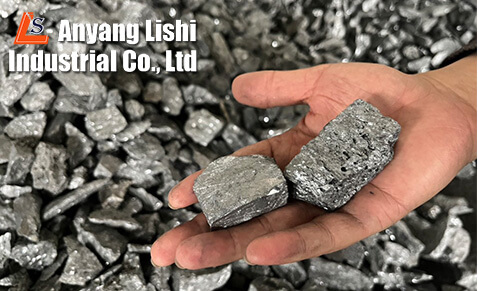
The Role of Calcium Silicon in the Deoxidation Process
Unlike bulk ferroalloys that focus on oxygen removal at early stages, CaSi is applied after primary deoxidation has already been completed. At this point, steel chemistry is largely established, and the focus shifts to melt behavior and process stability.
Calcium silicon supports deoxidation by interacting with residual oxide products rather than dissolved oxygen itself. This makes it a functional alloy used to refine steel condition instead of adjusting base composition.
Differences from Ferrosilicon and Silicomanganese
Ferrosilicon (FeSi) and silicomanganese (SiMn) are essential for steelmaking and remain the main tools for silicon and manganese control. However, their influence ends once oxygen is removed and target chemistry is reached.
CaSi serves a different purpose. Its effect lies in modifying the characteristics of existing oxide products, helping transform rigid, high-melting inclusions into softer compounds that behave more favorably during refining and casting.
This capability allows CaSi to complement traditional ferroalloys rather than replace them.
Typical Application Practice in Steel Plants
In industrial operations, CaSi is applied during secondary refining or final melt treatment, where process conditions allow precise control. Common practice includes addition during ladle refining, controlled vacuum treatment, or final adjustment before casting.
Steel plants place greater emphasis on addition timing and reaction efficiency than on the total addition amount. Proper use ensures that CaSi delivers consistent metallurgical response without disturbing overall steel chemistry.
Steel Grades That Benefit from Calcium Silicon Treatment
Calcium silicon is mainly applied in steel grades where melt stability and casting reliability are critical. These include:
Low-carbon and ultra-low-carbon steels
Clean steels requiring controlled inclusion behavior
Pipeline and structural steels
Continuously cast steels sensitive to flow interruptions
In these grades, CaSi contributes to smoother casting operations and more stable downstream processing.
Calcium Silicon as a Process-Oriented Alloy
Rather than functioning as a traditional deoxidizer, calcium silicon acts as a process-oriented alloy. Its value is measured by improved consistency, reduced casting interruptions, and enhanced production control.
For steelmakers focused on quality stability rather than bulk alloy consumption, calcium silicon plays a targeted but important role in modern refining practice.
Why Choose LSFerroalloy Calcium Silicon
At LSFerroalloy, CaSi is produced with a strong focus on reaction consistency and process reliability, not just nominal composition.
Stable calcium recovery behavior
Controlled particle size for predictable dissolution
Strict batch consistency to support refining repeatability
Proven performance in secondary refining and continuous casting practice
By aligning material behavior with real steelmaking conditions, LSFerroalloy calcium silicon helps steel producers achieve cleaner steel, smoother casting, and more stable operations.