
Calcium Silicon (CaSi) is a functional ferroalloy used in both steelmaking and cast iron production, serving two different metallurgical purposes.
In steel plants, CaSi as a deoxidizer to improve steel melt quality.
In foundries, CaSi is mainly used as an inoculant to control graphite formation in cast iron.
If you want to understand CaSi, you must separate these two application paths rather than treating it as a single-purpose alloy.
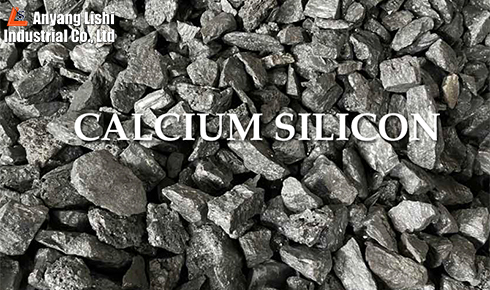
What Is Calcium Silicon?
Calcium Silicon (CaSi ) is an alloy composed primarily of silicon and calcium, produced under controlled smelting conditions. Due to the high chemical activity of calcium, it is typically used in controlled or late-stage additions, rather than as a bulk alloy.
Its value lies not only in oxygen removal, but in how calcium behaves in molten metal, making CaSi a functional material rather than a simple composition-adjusting alloy.
Calcium Silicon as a Deoxidizer in Steel Plants
In steelmaking, the focus is on steel cleanliness, inclusion control, and casting stability. CaSi is therefore used at specific stages to optimize the condition of molten steel after primary deoxidation.
Calcium Silicon as an Inoculant in Foundries
In casting, the focus is on solidification behavior and microstructure stability. CaSi works as an inoculant to promote graphite nucleation and reduce casting defects.
Connecting Steelmaking and Foundry Applications
Because CaSi is used in both steel plants and foundries, it often acts as a bridge between refining metallurgy and casting metallurgy. Its effectiveness depends on product consistency, controlled chemistry, and predictable dissolution behavior.
Because the objectives, timing, and evaluation criteria are different, CaSi must be analyzed separately in steel plants and foundries.
Next, we will use two articles to explain how it should be selected and applied in different metallurgical environments:
Calcium Silicon as a deoxidizer in steelmaking
Calcium Silicon as an inoculant in foundry production